Best Wide Tooth Comb for Fine Hair: Paul Mitchell Leads

Six wide tooth combs compared on published length, weight, tooth spacing and material. The winner is a 1.41 oz single comb; the closest rival is a 2-pack with a stated 0.39 in tooth pitch.

By Mateo CallahanUpdated 17 min read
On this page
- Best wide tooth comb for fine hair at a glance
- How I screened these six combs down
- Does tooth spacing matter more than the brand?
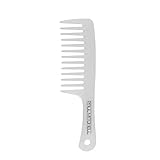
- 1. Paul Mitchell Detangler Comb — Best overall
- 2. Fgail 2PCS Wide Tooth Comb for Curly Hair — Best budget pick
- 3. SALON SILK 4PCS Professional Comb Set — Best for heavy use
- 4. UKSKS Large Hair Detangling Comb — Most versatile
- 5. Louise Maelys Wooden Wide Tooth Hair Comb — Best for families
- 6. ghd The Comb Out Detangling Comb — Best premium
- Plastic, cellulose acetate or sandalwood: which suits fine hair?
- How long should one comb last before you replace it?
- What the listings do not tell you about fine hair
- The verdict
- FAQ
The best wide tooth comb for fine hair is the Paul Mitchell Detangler Comb, a 9.63 in, 1.41 oz single comb that gives you enough length to pass through a whole section in one stroke. If you'd rather have two combs and a published tooth gap, the Fgail 2PCS set states a 0.39 in tooth pitch and costs the least of the six. Fine hair snaps under tension more than it snags, so the spec that decides this is spacing and length, not brand prestige.
Best wide tooth comb for fine hair at a glance
| Pick | Length | Teeth / material | Price |
|---|---|---|---|
Best overall Paul Mitchell Detangler Comb |
9.63 in | Wide-tooth claim Plastic |
Check Price |
Best budget pick Fgail 2PCS Wide Tooth Comb for Curly Hair |
9.5 in | 0.39 in pitch claim Heat-resistant plastic |
Check Price |
Best for heavy use SALON SILK 4PCS Professional Comb Set |
4-comb set | Wide, medium, fine, rat tail Carbon fibre claim |
Check Price |
Most versatile UKSKS Large Hair Detangling Comb |
5.9 in claim | Round-tip claim Cellulose acetate |
Check Price |
Best for families Louise Maelys Wooden Wide Tooth Hair Comb |
7.8 in claim | Wide-tooth claim Green sandalwood |
Check Price |
Best premium ghd The Comb Out Detangling Comb |
7.75 in | Anti-static claim Heat resistant |
Check Price |



How I screened these six combs down
I started from the hair comb listings in Amazon's Styling Tools & Appliances category and kept only combs the seller describes as wide tooth. That knocked out every fine-tooth comb, every dressing comb and every brush. Six survived, and I compared them on the numbers each listing actually publishes.
Here's the honest limitation, stated up front. Amazon's search does not filter for fine hair, and none of these six listings claims a fine-hair-specific design. Several say "all hair types". So I judged them on the measurements that matter to fine hair rather than on any marketing promise about it.
The screen ran in this order:
- Published length. A comb shorter than the width of your section forces two strokes where one would do. Two strokes means twice the tension.
- Stated tooth spacing. Only one listing gives a number. That one gets credit for it.
- Material and finish. Rough moulding seams catch fine strands. Listings that describe polishing or seam removal scored better.
- Count in the box. Two combs beat one when a comb lives in a shower and gets knocked behind the shampoo.
- Weight, where given. A lighter comb is easier to control at low tension.
Four of the six publish either a length or a full dimension set. Two publish a weight. Only one publishes a tooth pitch. That thin data is exactly why the middle sections below tell you what to check yourself.
Does tooth spacing matter more than the brand?
Tooth spacing matters more than the brand, and it's the single number I'd chase if a listing gave me only one. Fine hair is not weak in the way people assume. It's thin, so each strand carries less load before it snaps, and it tangles into small dense knots rather than big loose ones.
A wide gap between teeth lets the comb enter a knot instead of shoving it along ahead of the tooth. That's the whole mechanism. When teeth sit close together, they gather several strands and pull them as one rope, and the thinnest strand in that rope goes first.
Only the Fgail set puts a figure on it: a claimed 0.39 in tooth pitch. That's a genuine advantage over five listings that just say "wide". Length is the second number to look at, and here the field splits cleanly:
- Paul Mitchell: 9.63 in overall dimension
- Fgail: 9.5 in stated
- Louise Maelys: 7.8 in claimed
- ghd: 7.75 in overall dimension
- UKSKS: 5.9 in claimed
- SALON SILK: no comb length published
Longer is better for shoulder-length hair or beyond, because you can clear a section top to bottom in one pass. Short combs are for handbags and touch-ups. That's not a flaw, it's a different job.
1. Paul Mitchell Detangler Comb — Best overall
The longest comb here at 9.63 in, the lightest at 1.41 oz, and the one buyers choose most often in this set.
Best for: one person detangling wet, freshly conditioned hair in the shower Skip it if: you want a spare comb for a second bathroom
Two figures put this comb ahead. It measures 0.1 x 9.63 x 2.5 in, the longest span in the group, and it weighs 1.41 oz, the lightest weight published by any pick here. For fine hair that combination is the useful one. You get enough reach to travel from mid-shaft to ends without lifting, and little enough mass that you're not leaning on the comb to control it.
Paul Mitchell's listing says the wide-tooth design is meant to glide without pulling, and adds a stylist tip about using it to spread treatments and masks. That second use is where I'd put it to work. Fine hair usually needs conditioner distributed evenly rather than piled on, and a long comb spreads a small amount across a whole section.
The listing dates to 2017 and the model is simply COMB. It's a plain tool. There's no heat-resistance claim, no material named, no anti-static claim, and the colourway is described as opaque. Against the Fgail set it gives you one comb instead of two and no stated tooth gap, and against the ghd it publishes no heat rating. What it does give you is the best measured geometry for long fine hair, plus the second-lowest price position of the six.
Pros:
- Longest published span of the six at 9.63 in
- Lightest published weight here, 1.41 oz
- The one buyers pick most often in this set
- Second-cheapest of the six
- Listing suggests use for spreading treatments
Cons:
- No tooth spacing figure published
- Single comb only, no spare
- No stated material or heat rating
- Only one seller lists it
2. Fgail 2PCS Wide Tooth Comb for Curly Hair — Best budget pick
The only pick that publishes a tooth pitch, 0.39 in, and it arrives as a pair.

Best for: anyone who wants a stated tooth gap and a spare comb Skip it if: you dislike bright colour pairings on your shelf
This is the cheapest of the six and it publishes the number I most wanted to see. Fgail states a 0.39 in tooth pitch across a comb measuring 9.5 in x 2.36 in. Every other listing in this roundup says "wide tooth" and leaves you to guess. A stated gap turns a marketing word into something you can compare.
The material claim is heat-resistant plastic rated to 248°F (120°C), which the listing frames as blow-dryer safe. Fgail also claims rounded tips for scalp contact. Treat both as the manufacturer's words, not measured results, but the heat figure at least gives you a ceiling to work with.
Count is the other quiet win. You get two combs, black and pink. Fine hair benefits from combing while conditioner is still in, and shower combs get lost, dropped and cracked. Having a second one means the routine survives losing the first.
Against the Paul Mitchell it gives up a small amount of length, 9.5 in against 9.63 in, and it publishes no weight, so you can't tell how heavy it feels in hand. The colour pairing is fixed at black and pink, with no neutral option. Those are the trade-offs for the lowest price position and the clearest spacing spec in the set.
Pros:
- Only listing here with a stated tooth pitch, 0.39 in
- Cheapest of the six
- Two combs per pack
- Claimed heat resistance to 248°F (120°C)
Cons:
- No published weight
- Fixed black and pink colourway only
- Slightly shorter than the winner at 9.5 in
- Sells less often here than the winner or the SALON SILK set
3. SALON SILK 4PCS Professional Comb Set — Best for heavy use
Four combs in one box, including wide, medium, fine and a rat tail, and the second-fastest seller in this group.

Best for: someone who parts, sections and styles as well as detangles Skip it if: you only ever need one comb and hate clutter
This is the only multi-type set here. The box holds four combs: a wide tooth, a medium tooth, a fine tooth rat tail, and a braiding comb, all in black. For fine hair, the wide tooth does the detangling and the rat tail does the clean parting that a wide comb physically cannot manage.
SALON SILK describes the material as carbon fibre, and claims heat resistance and anti-static behaviour. Anti-static matters more with fine hair than with thick, because a static-charged fine strand lifts away from the section and refuses to lie flat. I'd read that as a plausible claim rather than a tested one.
The count is what earns the award. Four combs means one can live in a drawer, one in a bag, one by the mirror. It also sells faster here than four of the other five picks, which tells you people keep buying the format.
The published data is thinner than I'd like. The dimensions given, 0.7 x 1.5 x 0.5 in, are clearly not the length of a comb, so you don't actually know how long the wide tooth one is. No weight, no tooth pitch. Against the Paul Mitchell and the Fgail, you're buying breadth of format and giving up any confidence in the geometry of the comb you'll use most.
Pros:
- Four comb types in one box
- Rat tail included for precise parting
- Carbon fibre and anti-static claims
- Second-fastest seller of the six
Cons:
- No usable comb length published
- No weight or tooth spacing figures
- Black only, no colour choice
- Three of the four combs are not wide tooth
4. UKSKS Large Hair Detangling Comb — Most versatile
A short 5.9 in rectangular comb in plant-based cellulose acetate, supplied as a pair in tortoise shell and ivory.

Best for: a short handbag comb in a plant-based material Skip it if: you need a long comb for shoulder-length hair or longer
Material is the reason to look here. UKSKS says these combs are cut from cellulose acetate, which the listing describes as a non-petroleum plastic derived from plants. The pair arrives in tortoise shell and ivory, and the brand says each comb is sawn then polished to remove fine edges. That polishing step is the one I'd care about with fine hair, because a leftover moulding seam is exactly what shreds thin strands.
The claimed footprint is 5.9 in x 2.36 in in a rectangular shape, which is by far the shortest comb in this roundup. UKSKS frames that as compact and easier to hold, and it is genuinely pocketable. The listing also claims wide spacing and round tips suited to sensitive scalps.
Understand what that short body costs you. At 5.9 in you're making more passes through a long section than you would with the 9.63 in Paul Mitchell, and each extra pass is another chance to pull. For a chin-length bob or a bag comb, fine. For hair past the shoulders, the winner is the better tool.
There's also no published weight, no thickness, and the size field just reads "Large" while the feature text says 5.9 in, which is a contradiction worth noticing. It sits in the more expensive half of this set, second only to the ghd.
Pros:
- Cellulose acetate, described as plant-derived
- Two combs per pack in different finishes
- Claimed hand-polishing to remove fine edges
- Round-tip claim aimed at sensitive scalps
Cons:
- Shortest comb here at a claimed 5.9 in
- Size field and feature text disagree
- No published weight or thickness
- Second-most expensive of the six
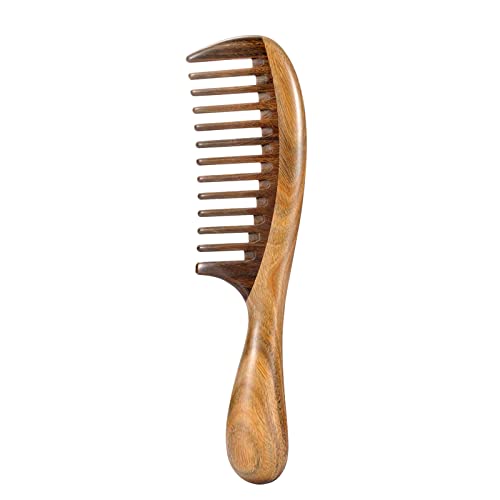
5. Louise Maelys Wooden Wide Tooth Hair Comb — Best for families
A 7.8 in green sandalwood comb, at 2.4 oz the heaviest published weight here, with an ergonomic handle.
Best for: a shared bathroom comb used with oils and leave-ins Skip it if: you comb in the shower or leave combs sitting wet
Wood is the point of difference. Louise Maelys makes this comb from green sandalwood with a polished finish, weighs it at 2.4 oz and gives a claimed size of 7.8 x 2.1 in. The brand notes each comb has its own grain, tone and a mild wood scent, which is honest about variation rather than promising uniformity.
For fine hair the appeal is the oil work. The listing suggests pairing it with a hair oil or leave-in to spread product from roots to ends, and wood carries and releases oil differently from plastic. Louise Maelys also makes an anti-static claim, framed around the strands that lift in dry, windy weather. That's the fine-hair problem in one sentence.
The shaped handle is why I'd hand this one to a household rather than keep it for myself. A comb that's easy to grip gets used correctly by whoever picks it up, including someone rushing.
Two real limits. It's the heaviest published weight in the set at 2.4 oz, nearly double the Paul Mitchell, and mass encourages you to pull rather than glide. More importantly, wood and standing water don't mix, so this is a dry-bathroom comb, not a shower comb. The listing also names no heat resistance, so keep it clear of a blow dryer nozzle.
Pros:
- Green sandalwood with polished finish
- Ergonomic handle for controlled strokes
- Listing recommends it for oils and leave-ins
- Anti-static claim aimed at dry weather
Cons:
- Heaviest published weight here, 2.4 oz
- Wood is a poor fit for shower use
- No heat resistance claim
- Grain and tone vary between units
6. ghd The Comb Out Detangling Comb — Best premium
The only pick with an explicit heat-resistance claim tied to blow-drying, in a 7.75 in body.

Best for: blow-drying with heat aimed straight at the comb Skip it if: you want the most published detail for the money
ghd's listing is short and specific. The comb is wide-toothed, anti-static, heat resistant for use with a hair dryer, and hand finished for the brand. Dimensions come in at 1.25 x 7.75 x 1.5 in, model 99280000049, dated 2018. That 1.25 in thickness figure is the chunkiest body in this roundup, which reads as a substantial spine rather than a flexible one.
Heat resistance is the reason it's here. If you comb a fine section straight while a dryer plays over it, the comb takes direct heat, and a comb that softens is a comb that starts snagging. Fgail claims 248°F (120°C) for its plastic, but ghd is the only other pick to state heat use at all.
The value case is harder. This is the most expensive pick here and it publishes no weight, no material, no tooth pitch and no colour. It's also the slowest seller of the six by a wide margin. At 7.75 in it's shorter than both the Paul Mitchell and the Fgail comb, so you're paying more for less reach and thinner published detail.
Buy it for the heat claim and the finish. Don't buy it expecting the specs to justify the position, because on paper they don't.
Pros:
- Explicit heat-resistance claim for dryer use
- Anti-static claim from the brand
- Thickest published body here at 1.25 in
- Hand-finished construction claim
Cons:
- Most expensive pick in this set
- No weight, material or tooth spacing published
- Shorter than the winner at 7.75 in
- Slowest seller of the six
Plastic, cellulose acetate or sandalwood: which suits fine hair?
Material decides how the comb feels, not how well it detangles. Spacing does the detangling. But surface finish is where fine hair gets damaged, so it's worth a minute.
Moulded plastic covers the Paul Mitchell, the Fgail pair and the SALON SILK set. It's cheap, it survives water, and it's the only honest choice for a shower comb. The risk is the seam left where the mould halves met. Run a thumbnail down the inside of a tooth: if you feel a ridge, that ridge is catching strands. Fgail states 248°F (120°C) heat resistance, which plastic does not always offer.
Cellulose acetate, used by UKSKS, is described as plant-derived rather than petroleum-based. The brand claims a saw-and-polish process specifically to remove fine edges. That process, if done well, is the best answer to the seam problem above.
Sandalwood, in the Louise Maelys, carries oil and reduces static build-up, which is why it suits dry styling with a leave-in. It's the pick that most dislikes water.
Ranked for fine hair specifically, based on what each listing actually claims:
- Polished cellulose acetate, for the smoothest edges
- Sandalwood, for oil work and static control
- Heat-rated plastic, for shower and dryer duty
- Unspecified plastic, where the finish is unknown
How long should one comb last before you replace it?
A wide tooth comb has no moving parts, so it doesn't wear out on a schedule. It fails suddenly, and usually at a tooth. Check yours the next time you use it and look for three things.
- A snapped or chipped tooth. The stub left behind has a sharp edge, and fine hair loses at that edge. Replace it, don't file it.
- A visible seam or burr. Hold the comb to a light and look along the inside faces of the teeth. Any ridge you can feel will snag.
- Flex under load. If a tooth bends noticeably as you pull through a knot, the comb is transferring that force into your hair rather than opening the tangle.
This is where the two-pack format quietly wins. The Fgail set and the UKSKS pair both give you a second comb, so the day the first one chips you're not stuck combing wet fine hair with a brush. The SALON SILK box goes further with four combs, though only one of them is the wide tooth you need.
One habit worth adopting: keep the plastic comb in the shower and the wood comb dry. Sandalwood sitting in standing water swells and roughens, and a roughened wood surface is worse for fine strands than plain plastic ever was.
What the listings do not tell you about fine hair
Here's the part most guides skip. Not one of these six listings claims a design specific to fine hair. Amazon's search treats "fine hair" as a loose hint, and the sellers write for curly, thick and textured hair because that's the bigger market. So you're reading specs written for someone else's problem.
Three gaps in particular:
Tooth count is never published. Five of six give you no spacing figure and none gives a tooth count. Two combs of the same 9.5 in length can have very different gaps. Only the Fgail pitch figure lets you compare.
Tooth tip shape is a claim, not a measurement. UKSKS and Fgail both say rounded tips. Nobody publishes a radius. A blunt tooth is kinder to a fine strand than a tapered point, but you'll only know once it's in your hand.
Flex is never described. A comb that bends spreads load; a stiff comb concentrates it. ghd publishes a 1.25 in thickness, which hints at a rigid body, and that's as close as any listing here gets.
What you can do about it: buy on the numbers that exist, which means length first and stated spacing second, then inspect the teeth on arrival. That's how I ended up favouring the two picks with real length figures over the two with the loftier marketing.
The verdict
The Paul Mitchell Detangler Comb is the best wide tooth comb for fine hair, and it wins on geometry rather than reputation. At 9.63 in it's the longest comb here, at 1.41 oz it's the lightest, and that pairing is exactly what low-tension detangling needs. It also sits second-cheapest of the six and sells faster than any other pick in this set, which suggests the format works for a lot of people.
Two conditions flip it. First, if you want an actual spacing number rather than the word "wide", buy the Fgail 2PCS set: a stated 0.39 in tooth pitch, a 9.5 in comb, two in the box, and the lowest price position of the six. Second, if you blow-dry with the nozzle aimed straight at the comb, the ghd Comb Out is the only pick whose listing frames heat resistance as a core feature, though at 7.75 in you give up reach and you pay the most here.
For everyone else, the runner-up's exact advantage is the tooth pitch figure, and it's a real one. If knowing the gap matters more to you than the extra 0.13 in of length and the lighter body, take the Fgail and don't look back.
FAQ
Is a wide tooth comb worth it for fine hair?
A wide tooth comb is worth it for fine hair because thin strands snap under tension rather than resisting it. Wider gaps let the comb enter a knot instead of dragging it along ahead of the teeth. The Paul Mitchell at 9.63 in clears a full section in one pass, which means fewer strokes and less pulling per detangling session.
What tooth spacing should I look for in a wide tooth comb?
Tooth spacing you should look for sits around the 0.39 in mark, which is the only published pitch figure in this group and comes from the Fgail 2PCS set. Wider gaps reduce how many strands each tooth gathers at once. Most listings only say "wide", so treat a stated number as a genuine advantage when you're comparing.
Paul Mitchell or Fgail: which is the better buy?
Paul Mitchell or Fgail comes down to reach against spacing. Paul Mitchell gives you 9.63 in of length and 1.41 oz of weight, the best pair of figures here. Fgail gives you a 9.5 in comb, a stated 0.39 in tooth pitch, two combs per pack and the lowest price position. Pick Paul Mitchell for long hair, Fgail for the spec and the spare.
Do I get better value from a multi-comb set?
You get better value from a multi-comb set when you actually use the other combs. The SALON SILK 4PCS box adds a medium tooth, a fine tooth rat tail and a braiding comb, which matters if you part and section your hair. If you only detangle, three of those four combs sit unused in a drawer.
What's the biggest mistake when combing fine hair?
The biggest mistake when combing fine hair is starting at the roots and pulling down through a tangle. Work from the ends upward in short sections instead, so each knot releases before the comb reaches it. The second mistake is keeping a comb with a chipped tooth, since the broken stub leaves a sharp edge that cuts thin strands.
Start with the Paul Mitchell if your hair reaches your shoulders or past them, because the 9.63 in span is the one spec in this roundup that directly reduces how many strokes you make. Fewer strokes on fine hair means fewer chances to snap a strand, and no amount of brand polish substitutes for that. When it arrives, hold it up to a light and run a thumbnail along the inside of the teeth before you use it. Smooth faces and blunt tips are what you want. If you'd rather have a stated tooth gap and a backup comb in the drawer, the Fgail pair does that job for less.