Best Silicone Free Hair Brush for Wavy Hair Picks
Six brushes compared on the specification that actually shapes a wave: how much the head and bristles flex. Includes the one pick in this set that openly uses silicone, and why that matters for your shortlist.
By Mateo CallahanUpdated 18 min read
On this page
- Best silicone free hair brush for wavy hair at a glance
- Three reasons picks got cut from this list
- Does silicone-free actually matter for waves?
- What flex does that bristle material can't
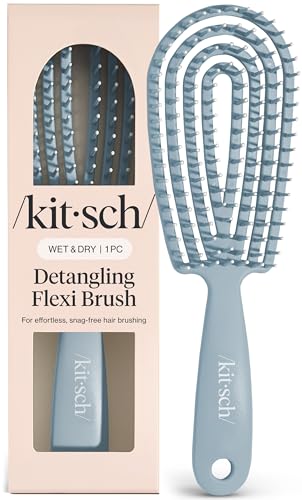
- 1. Kitsch Flexi Flow Detangler Brush — Best overall
- 2. Kitsch Detangle Brush — Most versatile
- 3. Yingbtr Curl Defining Brush for Curly Hair — Best for families
- 4. URTHEONE Hair Brush Boar Bristle Hairbrush — Best lightweight
- 5. Cricket Static Free Volumizer Hair Brush — Best upgrade
- 6. Ancable Detangler Brush — Best budget pick
- Wet brushing versus dry brushing your waves
- Which pick wins for your wave pattern?
- The verdict
- FAQ
The best silicone free hair brush for wavy hair is the Kitsch Flexi Flow Detangler Brush, because its bendable frame gives at the roots instead of dragging your wave pattern straight. At 2.15 oz with an 8.86 x 1.5 x 2.72 in head, it's built to flex rather than push. If you blow-dry for volume instead of air-drying, the Cricket Static Free Volumizer at 27.2 g and 8 x 1.25 x 1.6 in is the better tool.
Here's the specification that actually splits this field: how much the brush head and bristles give under pressure. Rigid paddles comb a wave into a straight line. Flexible heads follow the curve. Everything else is secondary.
Best silicone free hair brush for wavy hair at a glance
| Pick | Head size | Flex level | Price |
|---|---|---|---|
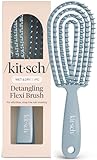
Best overall Kitsch Flexi Flow Detangler Brush |
8.86 x 1.5 x 2.72 in | Bendable frame claim | Check Price |
Most versatile Kitsch Detangle Brush |
7.28 x 1.38 x 3.15 in | Flexible bristle claim | Check Price |
Best for families Yingbtr Curl Defining Brush |
1.6 x 9.6 x 2.7 in | Curved rigid ABS body | Check Price |
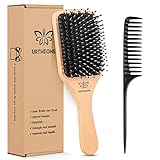
Best lightweight URTHEONE Boar Bristle Hairbrush |
1.5 x 9.5 x 3.2 in | Firm boar and nylon mix | Check Price |
Best upgrade Cricket Static Free Volumizer |
8 x 1.25 x 1.6 in | Firm crisscross bristles | Check Price |
Best budget pick Ancable 2-in-1 Detangler Brush |
1.9 x 7.8 x 2.7 in | Flexible bristle claim | Check Price |




Three reasons picks got cut from this list
I started with the hair brush listings that surface for wavy and curly hair, then cut hard. Three disqualifications did most of the work.
No published dimensions. A brush is a shape. If the listing won't tell me how wide the head is or how long the body runs, I can't tell you whether it will reach through mid-length waves or stall at the crown. Half the candidates went out on this alone.
Round barrels. Round brushes exist to stretch and straighten. That's the opposite job. Every pick here is a paddle, a cushion or a curved shaping brush, and the narrowest head in the set is the Cricket at 1.25 in.
No stated bristle behaviour. For waves I need to know whether the bristles or the frame move. Listings that described nothing beyond "premium quality" got cut, because that phrase tells you nothing about whether the brush follows your curl or fights it.
What survived is six brushes with real numbers attached: weights from 25.5 g up to 2.82 oz, four published model or release details, and six distinct head geometries. That's enough to compare properly.
One note before we go further. The best silicone free hair brush for wavy hair is a category Amazon's search does not filter for, and the section below explains what that means for your shortlist.
Does silicone-free actually matter for waves?
Here's the honest version. Silicone in hair care is usually a conversation about conditioner and leave-in, not hardware. The concern shoppers bring to a brush is different: silicone-tipped bristles, silicone scalp nubs, or a silicone-coated cushion pad.
Of these six listings, exactly one names silicone as a material. The Ancable brush describes a soft silicone scalp massager on its reverse side. The other five listings describe nylon ball tips, boar bristles, ABS plastic and flexible bristles without specifying silicone anywhere.
That is what the listings say. It is not a laboratory certificate, and I'm not going to pretend otherwise.
So here's how to judge it yourself:
- Check the bristle tip description. Nylon ball tips and boar bristle are named materials. "Soft tips" is not.
- Look at the cushion pad, not just the bristles. Some pads use a rubber or silicone base plate.
- Flip the brush over in the product photos. Scalp massager panels are where silicone usually appears.
- Read the handle material separately. A silicone grip touches your palm, not your hair.
If avoiding silicone entirely is non-negotiable for you, the five picks that don't name it are your shortlist, and the Ancable is the one to look past. If you're mainly worried about buildup on the hair itself, brush material barely enters the equation and you should be reading conditioner ingredients instead.
What flex does that bristle material can't
Most guides to the best silicone free hair brush for wavy hair compare bristle materials. Boar versus nylon versus plastic. I understand why: it's the easiest thing to put in a table.
It's also not what decides the outcome for waves.
A wave has a pattern with peaks and troughs. When you push a rigid brush head straight through it, the head can't follow that geometry, so it flattens it. The wave comes out as a soft bend instead of a defined S. That happens regardless of whether the bristles are boar or nylon.
Flex is the fix. Two things can flex:
- The frame or head. Kitsch says the Flexi Flow uses a bendable frame that adapts to your scalp. That's head-level movement, the kind that lets a brush ride over the curve of your skull and through the wave rather than across it.
- The bristles alone. Kitsch describes the Detangle Brush as having soft yet flexible bristles, and Ancable makes the same claim for its detangler. Bristle-level flex reduces pull. It does less for pattern preservation than a moving head.
Bristle length variation is the third factor worth naming. Kitsch says the Detangle Brush uses a high-and-low bristle pattern to separate strands in fewer strokes. Fewer strokes means less mechanical disruption, which for waves means less frizz. That's a design decision doing real work.
The Yingbtr takes the opposite route. Its curved ABS body is rigid by material, and the curve itself is the shaping mechanism: you're meant to cup the clump rather than let the brush bend. Different philosophy, and a valid one for thick waves that hold their shape.
1. Kitsch Flexi Flow Detangler Brush — Best overall
The only pick in this set whose listing claims the frame itself bends, which is exactly what a wave pattern needs from a brush.
Best for: loose waves that flatten under a stiff paddle Skip it if: you want a firm brush head for blow-dry tension
Kitsch describes a flexible, bendable frame that adapts to your scalp. No other listing here makes a frame-level claim, and that's the differentiator. Five of six describe bristles; this one describes the whole head moving.
The numbers support the design. At 2.15 oz it's the lightest of the three brushes with a published ounce weight, and the head measures 8.86 x 1.5 x 2.72 in. That length is the longest body in the set, which matters if your waves run past your shoulders. A short head means more passes, and more passes means more frizz.
It's also the brush buyers reach for most often out of these six. That's a signal about fit and comfort, not proof of performance, but it's worth knowing when you're choosing between two brushes that read similarly on paper.
Kitsch says the ultra-smooth bristles stimulate the scalp while detangling and that the brush works wet or dry. Model 504247 comes in Haze Blue only in this listing, one piece per pack.
The trade-off is real. This is the most expensive pick here, and a flexible frame gives you less control for tension styling than the Cricket or the URTHEONE. If your routine involves a hairdryer and a pulling motion, flex works against you.
Pros:
- Only pick claiming a bendable frame, not just bristles
- Longest head at 8.86 in for mid-length and longer waves
- Lightest of the ounce-rated picks at 2.15 oz
- The brush buyers choose most often in this set
- Rated by the maker for wet or dry use
Cons:
- Highest price position of the six
- Flex reduces control for blow-dry tension work
- Single colour and single count in this listing
- No stated warranty
2. Kitsch Detangle Brush — Most versatile
The high-and-low bristle pattern is the smart part, cutting the number of strokes it takes to clear a tangle.

Best for: one brush shared between a purse, gym bag and kid's bathroom Skip it if: you brush long waves and need more head length
This is the compact sibling to the Flexi Flow. At 7.28 x 1.38 x 3.15 in it's the shortest body of the six, and Kitsch pitches that as a purse and gym bag brush. The 3.15 in width is the second-widest here, so you lose length but keep coverage per stroke.
The bristle geometry is what earns its place. Kitsch says a high-and-low bristle pattern separates strands quickly, combining firm and soft bristles so the firm ones do the work and the soft ones handle the scalp. For waves, fewer strokes to clear a tangle means less pattern disruption. That's a more useful claim than a generic softness pitch.
Weight is 2.82 oz, the heaviest of the ounce-rated picks. That's not much in absolute terms, but it's a third more than the Flexi Flow and you notice it on a long brushing session.
Kitsch positions it for curls through straight styles and specifically as a kid-friendly detangler, which is a fair fit for a compact head. Model 67120, Haze Blue, one count per pack.
Against the Flexi Flow it makes a clear trade: fixed bristle flex instead of a bending frame, and 1.58 in less body length. You gain portability and a smarter bristle layout. You lose the head movement that best serves a defined wave.
Pros:
- High-and-low bristle pattern for fewer strokes
- Shortest body at 7.28 in, genuinely bag-sized
- Second-widest head at 3.15 in for coverage per pass
- Firm and soft bristles combined in one head
Cons:
- Heaviest ounce-rated pick at 2.82 oz
- No frame flex, only bristle flex
- Short head means more passes on long hair
- Premium price position without the frame upgrade
3. Yingbtr Curl Defining Brush for Curly Hair — Best for families
The curved rigid body is a shaping tool, meant to cup a wave clump rather than comb through it.

Best for: thick waves that need clumps shaped, not separated Skip it if: you want a published warranty or weight-matched flex claim
This is the design outlier of the six, and that's the reason to consider it. Instead of flexing, the Yingbtr uses a curved 1.6 x 9.6 x 2.7 in body. The curve is the mechanism. You place it against a section and follow the wave shape rather than pushing straight down through it.
It's the longest brush here at 9.6 in, which suits longer hair and full-family use where one brush handles several heads. Weight comes in at 2.12 oz, the lightest ounce-rated pick in the set, so the length doesn't translate into arm fatigue.
Yingbtr says the body is ABS plastic, chosen for durability and light weight, and that the vents help with wet and dry styling. The listing specifically calls out thick hair as its target, describing the brush as a way to keep thick sections neat and organised. Bristles are positioned for shaping, defining and detangling in a single tool.
The vented construction is worth flagging for a practical reason: vents mean airflow, which means faster drying if you diffuse.
Where it loses ground is transparency. There's no model number published, no release year, and no stated warranty. Compared to the Kitsch picks, the specification sheet is thinner, and the rigid ABS body offers none of the give that helps a loose wave hold its shape.
Pros:
- Longest body in the set at 9.6 in
- Lightest ounce-rated pick at 2.12 oz
- Curved shaping geometry unique to this set
- Vented body aids airflow when diffusing
- ABS construction named on the listing
Cons:
- Rigid body offers no flex for loose waves
- No published model number or release year
- No stated warranty
- Fewest published specifications of the six
4. URTHEONE Hair Brush Boar Bristle Hairbrush — Best lightweight
At 25.5 g this is the lightest brush in the set, and boar bristle does a job for waves that plastic can't.
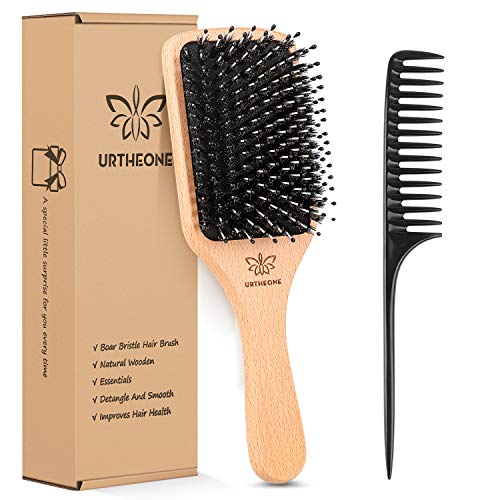
Best for: smoothing frizz on second-day waves Skip it if: you brush soaking wet hair straight out of the shower
Boar bristle is the material story here, and it's the only pick in the set that uses it. URTHEONE says the bristles redistribute oil from the scalp down the hair shaft, which is the traditional case for boar: it's a smoothing and polishing tool rather than a detangling one.
For waves, that's a specific and useful job. Second-day frizz is often just a dry cuticle. A light boar pass can lay it down without breaking up the pattern, which a detangling brush pushed through dry hair will absolutely do.
Weight is 25.5 g, the lightest figure published across all six, with a 1.5 x 9.5 x 3.2 in wooden paddle. That 3.2 in width is the widest head in the set, covering more hair per stroke. Released in 2024, natural wood finish, one count.
URTHEONE describes handmade nylon ball tips alongside the boar bristles, and says the tips are set to resist falling out. That mix matters: pure boar struggles to penetrate thick hair, and the nylon adds reach.
The honest limitation is wet use. The listing mentions wet or dry hair, but boar bristle on soaking wet waves tends to drag and clump rather than glide, and a wooden paddle is not a shower tool. Buy this as your dry finishing brush and pair it with one of the detanglers above.
Pros:
- Lightest published weight of any pick at 25.5 g
- Widest head at 3.2 in for coverage per stroke
- Only boar bristle option in this set
- Nylon ball tips added for reach through thick hair
- 2024 release with natural wood body
Cons:
- Boar bristle drags on very wet waves
- Wooden body less suited to shower or humidity
- Best used alongside a detangler, not instead of one
- No stated warranty
5. Cricket Static Free Volumizer Hair Brush — Best upgrade
The only pick built around blow-drying, with vents for airflow and a crisscross bristle layout for root lift.
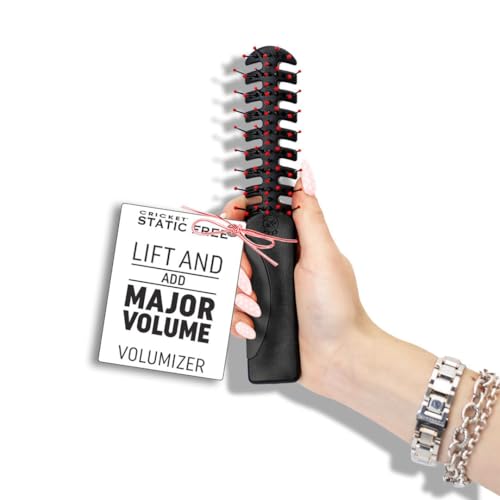
Best for: blow-drying waves for lift at the root Skip it if: you air-dry and never touch a hairdryer
Every other brush here is a detangler or a smoother. The Cricket is a styling tool, and if you use heat on your waves it does something none of the others attempt.
The head is 8 x 1.25 x 1.6 in, and that 1.25 in profile is the narrowest in the set by a clear margin. Narrow matters at the root: you can get the brush between the scalp and the dryer nozzle to lift a section without the head fouling on the hair around it. Weight is 27.2 g, second-lightest published figure of the six.
Cricket says the vents maximise airflow from your hairdryer to cut drying time, and that a crisscross bristle design lifts hair for volume. It also claims anti-static bristles that reduce flyaways, plus non-snag ball tips that stay put. Model 672555118853, released 2024, black.
Static is a real wavy-hair problem in dry months, so an anti-static claim is at least aimed at the right target. Treat it as the maker's claim, not a measured figure.
The trade-off is scope. This brush is narrow, firm and built for tension, which is precisely wrong for detangling a wet wave pattern. If you air-dry, skip it entirely and put the money toward the Flexi Flow.
Pros:
- Narrowest head at 1.25 in for root access
- Vented body for faster blow-drying
- Second-lightest published weight at 27.2 g
- Crisscross bristles aimed at volume and lift
- Model number and 2024 release both published
Cons:
- Firm bristles poorly suited to wet detangling
- Useless if you air-dry your waves
- Narrow head covers little hair per stroke
- Anti-static claim is unverified marketing copy
6. Ancable Detangler Brush — Best budget pick
The cheapest pick here, and the only one whose listing names silicone as a material.
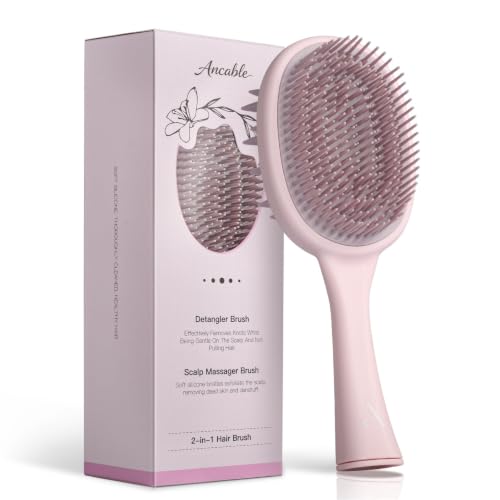
Best for: scalp buildup alongside light detangling Skip it if: you're specifically avoiding silicone on your scalp
Read that skip line carefully, because it's the deciding factor. Ancable describes a soft silicone scalp massager on the reverse of the brush head. If your reason for reading this guide is avoiding silicone contact entirely, this is the one pick to set aside.
For everyone else, the two-sided build is genuinely useful. One face has flexible detangling bristles; flip it and you get a scalp scrubber that Ancable says exfoliates, reduces excess oil and unclogs follicles. Waves grow from a scalp that gets less washing than straight hair does, so buildup is a common complaint.
Dimensions are 1.9 x 7.8 x 2.7 in, the second-shortest body here, in pink with one per pack. Ancable says the brush suits straight, wavy, curly and coily textures wet or dry.
It's the cheapest of the six, which is the honest reason it makes the list. Two tools in one at the lowest price position is a fair proposition.
The gaps are notable. No published weight, no model number, no release year, and it sells far slower than the rest of this set. Fewer published specifications means less to check before you buy, and against the Kitsch picks the bristle description is generic where theirs name a specific geometry.
Pros:
- Cheapest pick in this set
- Two tools in one head: detangler plus scalp scrubber
- Flexible bristle claim for reduced pull
- Rated by the maker for wet and dry use
Cons:
- Only pick that names silicone as a material
- No published weight, model number or release year
- Slowest seller of the six by a wide margin
- Generic bristle description with no named geometry
Wet brushing versus dry brushing your waves
This is where most wavy hair routines go wrong, and it has nothing to do with which brush you bought.
Waves clump when wet and separate when dry. Brush dry hair and you break the clumps apart into frizz. Brush wet hair and the clumps stay together. So the timing matters more than the tool.
A workable sequence:
- Detangle in the shower with conditioner on. Use a flexible detangler here. The Flexi Flow or the Kitsch Detangle Brush both list wet use.
- Work from the ends up. Start at the tips, move up in sections. Brushing from the root down drags every tangle into a knot at the bottom.
- Stop brushing once you're out. No dry brushing between washes unless you're deliberately smoothing.
- Use boar only on dry, second-day hair. The URTHEONE at 25.5 g earns its keep here, laying down frizz without shredding the pattern.
- Blow-dry with the narrow brush if you want root lift. The Cricket at 1.25 in gets in close.
Two brushes cover almost every wavy routine: a flexible wet detangler and a dry finisher. Buying one brush to do both is the compromise most people regret.
Which pick wins for your wave pattern?
Wave patterns aren't one thing, and the right brush shifts with yours.
Loose waves that straighten easily. Frame flex is your priority. The Flexi Flow's bendable head is the pick, because a rigid paddle will pull those soft bends out on the first pass.
Thick, dense waves that hold shape. Go rigid and curved. The Yingbtr at 9.6 in with its ABS body is built for exactly this, and its listing targets thick hair directly.
Tight waves bordering on curls. Fewer strokes wins. The Kitsch Detangle Brush's high-and-low bristle pattern is aimed at clearing tangles in less passing, which means less disruption.
Fine waves that go flat. Volume at the root is the whole game. The Cricket's 1.25 in vented head with a hairdryer does something no detangler here can.
Frizz-prone waves. Boar bristle. The URTHEONE is the only one in this set offering it.
Scalp problems alongside your waves. The Ancable's dual-sided head is the answer, with the silicone caveat attached.
The verdict
At the entry level, the URTHEONE boar bristle brush is the value buy in this set. It's 25.5 g, the widest head here at 3.2 in, and the only boar option available, which makes it a genuine specialist tool at the second-cheapest price position. The Ancable sits below it and buys you a scalp scrubber, but it names silicone as a material and publishes the thinnest specification sheet of the six.
In the middle tier, the Yingbtr Curl Defining Brush is the pick for thick waves. Its curved 9.6 in ABS body shapes clumps instead of separating them, and at 2.12 oz it's the lightest ounce-rated brush in the set. The Cricket occupies the same tier for a completely different job: blow-dry volume, using a 1.25 in vented head that no other pick can match at the root.
At the top, the Kitsch Flexi Flow Detangler Brush is the winner and the default recommendation. It's the only brush here whose listing claims the frame itself bends rather than just the bristles, and that's the mechanism that preserves a wave pattern instead of combing it out. Its 8.86 in head is the longest body among the flexible picks. The Kitsch Detangle Brush is the runner-up, and its exact advantage is the high-and-low bristle pattern that clears tangles in fewer strokes, packed into a 7.28 in body small enough to live in a bag.
FAQ
Is the best silicone free hair brush for wavy hair worth paying more for?
Worth paying more for? Yes, if the extra buys frame flex. The Flexi Flow sits at the highest price position here and it's the only pick claiming a bendable frame rather than just flexible bristles. That's a structural difference, not a finish upgrade. If you air-dry and want pattern definition, that mechanism is the thing you're actually buying.
What size hair brush works best for long wavy hair?
Size works best when the head is long enough to cover a section in one pass. Among these six, the Yingbtr at 9.6 in and the Flexi Flow at 8.86 in are the longest bodies. Width matters too: the URTHEONE's 3.2 in head is the broadest here. Short heads like the 7.28 in Kitsch Detangle Brush need more passes, and more passes on waves means more frizz.
Kitsch Flexi Flow or Kitsch Detangle Brush: which should I pick?
Flexi Flow or Detangle Brush comes down to flex versus portability. The Flexi Flow claims a bendable frame and an 8.86 in body, which suits mid-length and longer waves at home. The Detangle Brush is 7.28 in, 2.82 oz, and uses a high-and-low bristle pattern for fewer strokes. Choose the Flexi Flow for definition, the Detangle Brush if one brush travels with you.
Can I use these brushes on wet wavy hair?
Use on wet wavy hair depends on the pick. Kitsch lists both its brushes for wet or dry use, and Ancable and Yingbtr make the same claim. The URTHEONE is the exception in practice: boar bristle drags on soaking hair, and a wooden paddle isn't a shower tool. Detangle wet with a flexible plastic brush, then finish dry with boar.
What's the biggest mistake wavy hair owners make with brushes?
The biggest mistake is brushing dry hair between washes. Waves clump when wet and separate when dry, so a dry brush pass breaks those clumps into frizz you then spend the day fighting. Detangle in the shower with conditioner on, work ends to roots, and leave the brush alone until your next wash unless you're deliberately smoothing.
Start with the question of whether you air-dry or blow-dry, because that single answer eliminates half this list. Air-dryers want flex, which points straight at the Flexi Flow and its bendable frame. Heat users want a narrow vented head, which is the Cricket at 1.25 in and nothing else here. The Flexi Flow is the right default for most wavy hair because it's the only pick in this set engineered to move with your pattern rather than through it, and at 2.15 oz across an 8.86 in head, it's built to do that without wearing out your arm.