Best Lightweight Wide Tooth Comb for Fine Hair

Six combs weighed, measured and ranked for fine hair. The Kent F3T leads on materials; a Paul Mitchell option wins on tooth spacing for wet detangling.

By Mateo CallahanUpdated 14 min read
On this page
- The specification that actually decides this
- Best lightweight wide tooth comb for fine hair at a glance
- How I screened the field down to six
- 1. Kent F3T Tortoiseshell Fine Tooth Comb — Best overall
- 2. Kent 16T Tortoise Fine and Wide Tooth Comb — Best premium
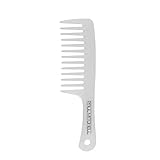
- 3. Paul Mitchell Detangler Comb — Best minimal setup
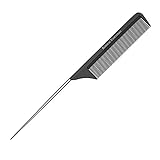
- 4. Bardeau Essentials 8.8 in Tail Comb — Best upgrade
- 5. SALONSILK 4PCS Professional Comb Set — Best for pros
- 6. AFT90 Carbon Fiber Teasing Comb — Best budget pick
- Wide tooth, fine tooth, or both on one comb?
- What to look for if none of these six fit
- Which of these two: Kent F3T or Paul Mitchell Detangler?
- What owning a good comb actually involves
- The verdict
- FAQ
The best lightweight wide tooth comb for fine hair is the Kent F3T Tortoiseshell, a 27.2 g hand-polished acetate comb whose rounded saw-cut teeth glide instead of catch. If you need a genuinely wide-tooth side for wet detangling in the same tool, the Kent 16T is the better buy, with a double-tooth 7.28 in body that splits parting and detangling across one comb.
The specification that actually decides this
Fine hair does not break because a comb is too heavy. It breaks because a moulded plastic tooth has a seam ridge running down its length, and that ridge drags. That is why the two Kent combs anchor this list: both are saw-cut from cellulose acetate sheet and hand polished, so the teeth are rounded rather than seamed. The AFT90 and the SALONSILK are carbon-fabric mouldings from the same category. They are lighter on the wallet, but the tooth finish is not the same.
A quick note on the search modifier. The best lightweight wide tooth comb for fine hair, taken literally, points to a single tool with wide-spaced teeth. Two of the six picks here are single-piece fine-tooth combs, so read each section against your own use before buying. I will flag which picks satisfy "wide tooth" plainly and which do not.
Best lightweight wide tooth comb for fine hair at a glance
| Pick | Tooth layout | Weight | Price |
|---|---|---|---|
Best overall Kent F3T Tortoiseshell Fine Tooth Comb |
Fine, saw-cut acetate | 27.2 g | Check Price |
Best premium Kent 16T Tortoise Fine and Wide Tooth Comb |
Fine and wide, double-tooth | 1.06 oz | Check Price |
Best minimal setup Paul Mitchell Detangler Comb |
Wide-tooth, single row | 1.41 oz | Check Price |
Best upgrade Bardeau Essentials 8.8 in Tail Comb |
Fine tooth with pintail | not listed | Check Price |
Best for pros SALONSILK 4PCS Professional Comb Set |
Wide, medium, fine, braiding | not listed | Check Price |
Best budget pick AFT90 Carbon Fiber Teasing Comb |
Fine and wide, one comb | not listed | Check Price |




How I screened the field down to six
I compared the published specifications side by side, then mapped each listing to the buyer profiles that actually shop this category: someone drying fine hair after a shower, someone parting for a blow-dry, someone building a small kit.
The screen ran on three cuts. First, listings without a clear tooth-layout description were dropped: if the manufacturer will not say whether the teeth are wide, fine or both, you cannot judge fit. Second, anything moulded rather than finished got flagged against the two hand-polished Kent combs, because tooth finish is the deciding trait for fine hair. Third, I lined up weights where the listing published one, and left "not listed" honest where it did not. Three of the six omit a published weight. That matters for a keyword built on the word lightweight, so it lives in the table.
1. Kent F3T Tortoiseshell Fine Tooth Comb — Best overall
A 27.2 g hand-polished tortoiseshell comb whose saw-cut teeth are the closest thing to a fine-hair specialist in this set.
Best for: fine hair that snags on moulded plastic teeth Skip it if: you need genuinely wide-spaced teeth for wet detangling
Kent lists the F3T as a 6.25 in dressing comb, saw-cut from cellulose acetate sheet, hand polished so the teeth end in soft rounded tips. That last detail is the one that matters for fine hair, because a rounded tooth tip slides past a strand rather than catching on it. The listed weight is 27.2 g and the dimensions are 4 x 1 x 2 in in the retail packaging. Kent says the acetate is plant-derived rather than petroleum-based, which is a materials claim rather than a performance one, but the tactile flex is genuine and worth having in a fine-hair comb.
Read the name honestly: this is a fine-tooth comb, not a wide-tooth comb. It is the best lightweight wide tooth comb for fine hair on this page only because the fine layout is what fine hair usually wants for finishing and parting. If you specifically need wide-set teeth to draw a conditioner through wet hair, jump to the 16T or the Paul Mitchell.
Pros:
- Saw-cut, hand-polished acetate teeth
- Published 27.2 g weight, one of only three here
- Plant-derived cellulose acetate body
- Sits at the premium end without feeling fragile
Cons:
- Fine layout only, no wide-tooth side
- Sits in the premium price position of the set
- Only one seller lists it
2. Kent 16T Tortoise Fine and Wide Tooth Comb — Best premium
A double-tooth 7.28 in comb that puts a real wide-tooth side and a fine side on one hand-polished acetate body.

Best for: one comb that handles parting and detangling in the same tool Skip it if: you only ever comb dry, fine hair at the mirror
If you read "best lightweight wide tooth comb for fine hair" and pictured one tool that does everything, this is the one that maps to that idea. The 16T lists at 1.06 oz with a 0.2 x 7.28 x 1.57 in body, so it is genuinely light in the hand. Kent says the wide teeth are meant for detangling and the fine side for finishing after a straightener, which is the exact split fine hair benefits from most: wide first, wet, then fine to smooth once dry.
Same build story as the F3T. Saw-cut cellulose acetate sheet, hand polished, rounded teeth. The listing runs the "world's oldest brush manufacturer" line, which is a brand claim rather than a product test, but the acetate finish is what you are actually paying for. The trade-off against the F3T is length: at 7.28 in this is a dresser-sized comb, not a pocket one, and it sits at the top of this set on price.
Pros:
- Wide and fine teeth on one 7.28 in comb
- 1.06 oz published weight
- Hand-polished acetate, same as the F3T
- Rounded teeth designed not to scratch the scalp
Cons:
- The most expensive pick here
- Longer body than the F3T, less pocketable
- Only one seller lists it
3. Paul Mitchell Detangler Comb — Best minimal setup
A 1.41 oz wide-tooth comb built for one job, drawing through wet fine hair without pulling.

Best for: wet detangling fine hair after the shower Skip it if: you want a hand-finished tortoiseshell look
This is the only pick here whose entire design brief is wide-tooth detangling, and it shows in the specifications: 9.63 in long, 2.5 in wide, 0.1 in thick, and 1.41 oz on the scale. Paul Mitchell says the comb glides through hair wet or dry without pulling, and recommends it for distributing masks and treatments evenly through the length. For fine hair that mats when a towel touches it, that job is the one you want a dedicated tool for.
The trade-off against the two Kent combs is finish. This is a moulded plastic comb, opaque and functional, not a saw-cut acetate one. The teeth are wide enough that finish matters less than on a fine-tooth comb, so the practical penalty for fine hair is small. It is the second-cheapest of the six and sells faster than any other pick in this set, which is worth knowing when you are choosing between a lifetime comb and one that just works.
Pros:
- Genuine wide-tooth spacing for wet detangling
- Published 1.41 oz weight
- 9.63 in length, easy to grip mid-shampoo
- The one buyers choose most often here
Cons:
- Moulded plastic, not saw-cut and polished
- Single tooth layout, no fine side
- Only one seller lists it
4. Bardeau Essentials 8.8 in Tail Comb — Best upgrade
A carbon-fibre pintail comb with a stainless steel tail, aimed at precise parting rather than wide-tooth detangling.

Best for: precise parting with a metal pintail Skip it if: you want a genuinely wide-tooth comb
The Bardeau Essentials tail comb is the pick that pulls this list toward styling work rather than shower detangling. It is 8.8 in long overall, and Bardeau says the carbon-fibre body is stronger and lighter than plastic and rated heat-resistant to 356°F, which is the kind of number that matters when you park a comb next to a hot iron. The stainless steel pintail is what earns the upgrade label: for parting fine hair cleanly, a metal point is more accurate than a plastic one and less likely to snag.
Read the name closely. This is a fine-tooth pintail, not a wide-tooth comb, so it slots into the "for fine hair" half of the keyword rather than the "wide tooth" half. No published weight, which is a real gap for a lightweight roundup. Take the carbon-fibre lightness as an attributed claim, not a measured figure. If your job is parting and finishing rather than pulling through wet knots, that trade is fine.
Pros:
- Stainless steel pintail for clean partings
- Carbon-fibre body, per the listing
- Heat resistant to 356°F, claimed
- Anti-static claim aimed at flyaway fine hair
Cons:
- No published weight
- Fine-tooth layout, not a wide-tooth comb
- Sits mid-range on price without a weight to compare
5. SALONSILK 4PCS Professional Comb Set — Best for pros
A four-piece carbon-fabric kit that covers wide, medium, fine and braiding in one box.

Best for: one kit that covers parting, cutting and braiding Skip it if: you only need a single comb by the sink
This is the only multi-piece pick in the set. SALONSILK lists a wide-tooth comb, a rat-tail fine-tooth comb, a medium-tooth comb and a braiding comb in one four-count package, all made from what the listing calls superior carbon fabric with a heat-resistant and anti-static finish. For fine hair, the wide-tooth piece in the set is what matters most, and the medium comb is useful for the awkward step between wet detangling and fine finishing.
The trade-off is specificity. Because this is a set, no single comb here is engineered as finely as the Kent 16T or the Paul Mitchell. You are paying for coverage, not for a hand-polished tooth. No published weight either, and the retail-box dimensions on the listing describe the packaging rather than any single comb. If you cut hair, teach, or travel between clients, the coverage earns its place. If you comb your own hair once a day, four combs is three too many.
Pros:
- Four combs across wide, medium, fine and braiding
- Anti-static claim for fine hair flyaways
- Mid-range price position
- Covers most fine-hair jobs in one purchase
Cons:
- No published weight for any comb in the set
- Moulded, not saw-cut like the Kent pair
- Overkill for a single-user bathroom
6. AFT90 Carbon Fiber Teasing Comb — Best budget pick
A slim black comb with both a wide and a fine section on one 8.1 in body, at the entry end of the set.

Best for: a cheap carbon-look comb to keep in a bag Skip it if: you want a published weight or a real wide-tooth section
The AFT90 is the cheapest of the six and pairs a fine and wide layout on one 0.05 x 8.1 x 1.2 in body. The listing describes it as a barber comb for all hair types, which is an every-use marketing frame rather than a fine-hair specification. For a spare to keep in a gym bag or a desk drawer, that generic profile is fine.
Weight is not published, which is the one gap that hurts for this keyword. The dimensions suggest a thin, light body, but I will not put a figure on it. This is also the pick with the fewest published specifications in the set, so if you like knowing the exact material composition and warranty, the Kent combs give you more to read. The gap between this and the Paul Mitchell on price is small; the gap on published detail is larger.
Pros:
- The cheapest of the six
- Fine and wide layout on one comb
- Slim 8.1 in profile, easy to carry
- Sold as a two-count pack
Cons:
- No published weight
- Fewer published specifications than any other pick
- Generic all-hair-types framing, not fine-hair specific
Wide tooth, fine tooth, or both on one comb?
Fine hair benefits from both, used at different moments. Wide teeth first, on wet hair, to lift tangles without stretching the strand. Fine teeth second, on dry hair, to smooth the cuticle and finish a parting. If you buy one comb, buy the one whose primary tooth layout matches when you comb most often.
- Comb mostly in the shower or right after: prioritise wide teeth. Paul Mitchell or Kent 16T.
- Comb mostly at the mirror, dry: prioritise fine teeth. Kent F3T or Bardeau.
- Comb both, or for other people: dual-tooth body. Kent 16T or AFT90.
The one trap here is buying a fine-tooth comb because the listing says "for fine hair". Fine hair does not mean fine tooth spacing. It means the individual strand is thin, and a thin strand snaps if a comb yanks. Tooth finish protects fine hair more than tooth spacing does.
What to look for if none of these six fit
Three specifications matter more than the rest, and every one of them is checkable on a listing page.
- Tooth finish. Look for saw-cut, hand-polished, or ground rather than moulded. A seam line down the tooth is what catches fine hair.
- Material. Cellulose acetate flexes without cracking. Carbon fibre and carbon fabric are lighter and anti-static, but tooth finish still decides comfort.
- Weight, in grams or ounces. A published figure is a mark of a serious listing. "Lightweight" without a number is marketing.
Two nice-to-haves: heat resistance if you comb near irons, and a rounded rather than pointed tooth tip if you have a sensitive scalp. Never pay extra for a wooden handle on a comb that will live in the bathroom, because wood and steam are not friends.
Which of these two: Kent F3T or Paul Mitchell Detangler?
The Kent F3T and the Paul Mitchell Detangler are the two picks fine-hair shoppers most often cross-shop, so the choice deserves its own answer. The F3T is a saw-cut, hand-polished fine-tooth acetate comb at 27.2 g. The Paul Mitchell is a moulded wide-tooth plastic comb at 1.41 oz. Both are lightweight; neither is heavy.
Pick the F3T if your comb work is dry: parting, finishing, styling, taming a flyaway. The tooth finish is what you are paying for, and dry fine hair rewards a rounded tooth tip more than a wide spacing.
Pick the Paul Mitchell if your comb work is wet: drawing conditioner through the length, breaking up tangles after a towel, distributing a mask evenly. Wide teeth win here because they clear the mat without stretching each strand. The finish penalty on wet, well-lubricated hair is small.
Buying both is not a waste. They cost less together than the Kent 16T and cover the two ends of the routine.
What owning a good comb actually involves
- Rinse it under warm water once a week if it lives in the bathroom, because product residue coats the teeth and drags on fine hair the same way a seam does.
- Do not soak an acetate comb overnight. The Kent combs are hand-finished sheet acetate, and prolonged soaking can dull the polish.
- Keep it out of the direct path of a hot iron. Bardeau publishes a 356°F heat resistance figure; the moulded plastic combs in this set do not, so treat those as room-temperature tools.
- Replace when the teeth roughen. Run a fingernail down the length; if it snags anywhere, that spot will snag hair too.
None of this is exotic. A well-chosen comb outlives a hairdryer, sometimes by a decade, and the specifications in the listing are the ones that decide whether it does.
The verdict
The Kent F3T Tortoiseshell is the best lightweight wide tooth comb for fine hair for most readers, because tooth finish is what actually protects a fine strand and Kent's saw-cut, hand-polished acetate is the closest thing to a specialist finish in this price bracket. The 27.2 g weight is honest and published, the 4 x 1 x 2 in body fits a drawer, and the material story stands up when you read the listing carefully.
Two conditions flip the pick. If you specifically need wide-set teeth in the same tool, buy the Kent 16T: it has both layouts on one 7.28 in body and 1.06 oz frame, and the finish story is the same. If you comb mostly wet and want one dedicated tool for that job, the Paul Mitchell Detangler is the better buy at 1.41 oz, with a genuine wide-tooth spacing and the sales history of the set.
Two picks did not make the top three. The Bardeau is a strong pintail for parting but not a wide-tooth comb. The SALONSILK set is coverage rather than specialism, and the AFT90 undersells itself by publishing so little.
FAQ
Is a lightweight comb actually better for fine hair?
A lightweight comb is not automatically better for fine hair. What matters is tooth finish: rounded, seamless teeth glide, seamed moulded teeth catch. The two Kent combs here are hand-polished saw-cut acetate and both weigh under 30 g. If you are choosing on weight alone, you may miss the real deciding trait, which is how the tooth ends.
Is the Kent F3T worth it over a cheaper carbon comb?
The Kent F3T is worth it if you value the hand-polished tooth finish and the acetate flex. It is the most expensive comb in this set outside the 16T, and the AFT90 is the cheapest of the six. Both function. The F3T is the one you keep for a decade; the AFT90 is the one you leave in a bag.
What weight counts as a lightweight comb?
Weight counts as lightweight when the whole comb sits under about 30 g, or roughly an ounce. The Kent F3T is 27.2 g, the Paul Mitchell 1.41 oz and the Kent 16T 1.06 oz. Three of the six picks here publish no weight at all, which is why the specifications table above matters more than the marketing line on any single listing.
Kent F3T vs Kent 16T: which fits fine hair better?
The Kent F3T fits fine hair better for dry finishing, because it is a fine-tooth comb throughout its 6.25 in length. The 16T fits fine hair better as a one-tool solution, because its 7.28 in double-tooth body puts wide teeth for wet detangling and fine teeth for smoothing on one comb. Choose F3T for one job, 16T for both.
What is the biggest mistake buying a comb for fine hair?
The biggest mistake buying for fine hair is picking on tooth spacing alone and ignoring tooth finish. A wide-tooth comb with a seam ridge down each tooth still catches. A fine-tooth comb with rounded, polished tips still glides. Read the listing for words like saw-cut, hand-polished or ground before you read the number of teeth per inch.
Start with the Kent F3T if you comb dry more than wet, and add a Paul Mitchell Detangler later if your routine grows to include a weekly mask. That pairing costs less than the 16T alone and gives you a specialist for each end of the routine, which is what fine hair actually rewards. The one thing not to do is treat a comb as a five-dollar afterthought when a dryer costs a hundred. The comb touches your hair more often, in more states, and for longer. Pick the finish, not the marketing line.